Which foods are making Indian Americans
obese?
Dr. Panchajanya Paul, MD
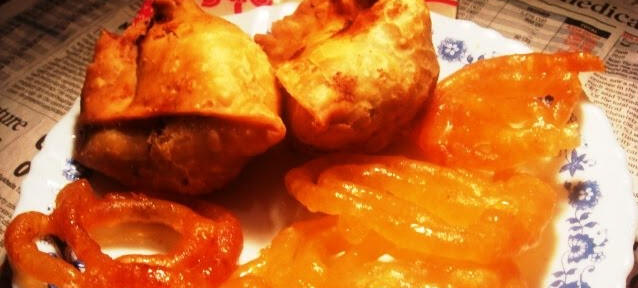
Many first generation Indians living in the US are overweight or obese.
Obesity is becoming a pandemic among the Indians living abroad. Rates of
obesity are also on a rise among the affluent of India. Obesity is a serious
health hazard and increases the risk of hypertension, hypercholesterolemia,
diabetes, stroke, heart attack, depression, and cancer. Obesity is one of
the leading causes of morbidity and mortality across the world. Among
Indians, when compared to our parents and grandparents, the weight gain is
much more in the present generation. The genes are the same. The only change
is in our environment and lifestyle.
When Indians move to the US, they encounter a new environment. There are
more opportunities for growth and success. The Indian community, although
only 1 percent of the US population, has prospered and succeeded in high
paying jobs fields like medicine, engineering , research and business. The
life span has increased as people have access to cleaner air, water, food
and better medical care. The abundance of cheap food is however a mixed
blessing. Although, rarely one suffers from nutritional deficiencies,
overweight and obesity has increased. There are many reasons for that. First
of all our lifestyle has changed. We move and exercise much less and are
more sedentary than ever. Secondly, the food we eat, even though looks and
taste the same, has changed tremendously over the years. Although too much
focus is put on the fat and the calorie content of the food, they only
constitute a partial picture. Here are the four important food ingredients
which are of concern.
Sugar: Indians are fond of eating sweets. All joyous celebrations are
marked by sweets. Even the Indian Gods are fond of sweets; no offering to
God or ceremony is complete without the sweets. Traditional Indian sweet
prepared in the traditional way uses milk, fruits and other ingredients.
Albeit, sugar is bad for health and causes weight gain, diabetes, tooth
damage, and host of other problems. However, sugar is not the worst. Most
sweets in US are made of high fructose corn syrup which is chemically
processed and has deleterious health consequences. The corn syrup is kept
artificially cheaper in the US by the farm subsidies. As a result all the
sugary beverages high in calories like coke, cookies, candies, chocolates,
cakes are cheaper and readily available. These have empty calories and last
longer- both outside and inside the body. They are also cheaper than
products made of cane sugar or jaggery. They are everywhere, and form an
integral part of the American culture, and sweet tooth Indians find them
hard to resist. High fructose corn syrup has been directly linked to
metabolic syndrome which is a condition where the blood pressure, blood
sugar, blood cholesterol, blood triglycerides, and the waist circumference
goes up leading directly to obesity. Hence, make every possible attempt to
eliminate sugar and corn syrup from the diet. It is also the quickest way to
loose weight.
Wheat: Wheat is an integral part of the Indian diet. It is a staple
food and also the constituent of the most of Indian snacks. Samosa, Chat,
Chapatti, Nan, Puri, Paratha al are made of wheat or wheat derived products.
Wheat is also present in the cereals, noodles, pasta, bagels, muffins,
pancakes, waffles, donuts, pretzels, crackers. It’s hard to escape wheat in
America. Wheat was first domesticated around 8000 years ago in the Fertile
Crescent, and had been consumed in India for at least three thousand years.
Wheat was successfully harvested, eaten and digested by our forefathers in
healthy way. Now one may ask- what’s wrong with the wheat which was good for
our grandparents and great grandparents? The wheat we eat now is not the
same wheat used by our grandparents. The current strain of the wheat is a
product of genetic engineering. The green revolution pioneered by Norman
Borlaug, who was also awarded the Nobel peace prize, began the trend of
using high yielding grains, and it helped India to become self-sufficient in
food. But it came with a high cost. The high yielding wheat- Triticum
Aestivum, has now replaced the older sturdy ones, and are now cultivated
across the world. This modern wheat, also called the common wheat,
constitutes 95 percent of all wheat grown in the world. It has much higher
gluten content and as a result we now see a rise of gluten sensitivity and
celiac diseases. The modern wheat has less nutrients and more starch. It
increases the blood sugar more rapidly. It tends to store in the body more
readily and causes obesity. Also the modern wheat made by genetic
engineering is too fragile to survive on its own, and requires heavy doses
of pesticides and artificial fertilizers. Try to limit the amount of wheat
in the diet, or replace them with oats, quinoa, and wild rice.
Milk: Milk is the main source of protein in the Indian vegetarian
diet. The milk and its derivatives like curd, rayta, yoghurt, ghee, paneer,
cheese, cream, butter, and butter-milk are present in some form in most
Indian meals. The quality of milk depends on the quality of food given to
the cow. Thousand years back, Indian thinkers, realizing the importance of
cow and its milk for the Indian diet and economy, declared the cow sacred.
Over time, this became enshrined in Hinduism, and protection of cow became a
religious duty for the devout Hindus. But the way cows were kept has
changed. In the past, cows would graze on green pastures, and eat on the
healthy grass and green leaves full of nutrients. In US most cows are grown
in the feed lot and are milked all the year. They are fed cheap corn laced
with pesticides. Cows also get hormonal injections to increase milk supply.
These cows bred for milk become sick often and are given regular antibiotics
prophylactically. These cows die much earlier. Milk from corn and other
grain feed cow has a high content of omega 6 fatty acids. Omega 6 fatty acid
tends to be inflammatory and also cause weight gain. On the other hand,
organic milk from the grass fed cows has a higher content of omega 3 acids,
vitamin D, Vitamin A and other nutrients. The omega 3 acids are
anti-inflammatory and good for the brain and heart. Even though expensive,
every attempt should be made to get organic grass fed milk, preferably
non-homogenized.
Potato: Potatoes are ubiquitous in the Indian diet. They are in
virtually in all dishes from curries, soups, and sabjies. It is often
forgotten that potato is a relatively new food for the Indian palate.
Historically, potatoes were first introduced in India by the Portuguese who
brought them from the Americas around 500 years ago. Thus, before the 1500
AD, there was no potato in the Indian subcontinent. Potatoes are nutritious
food and they were consumed by the Native Americans in abundance. But the
way, potatoes are cooked in Indian meal, causes obesity. The skin of
potatoes is rich in fiber and nutrients. It is peeled off and discarded in
most Indian preparation. Then the potato is boiled in water. The water
soluble vitamins like B, C leaves the potato and goes into the boiling
water. The water is thrown most of the time. Then the potato is over cooked
or deep fried. All this process eliminates most of the nutrients, and also
increases the glycemic index of potato. High glycemic index means it will
raise the blood sugar rapidly, and this contributes to diabetes and obesity.
Since potato is easy to grow, store and cook, it has been historically
replacing other nutritious vegetables from the daily menu. Thus limiting
potatoes in the diet and replacing them with other vegetables like carrot,
beat, squash, and papaya will help lose weight.
In summary, Indians living in the US are becoming fat like other groups
living in the developed world. There are many reasons for that including the
major life style changes that happened when one moved to US from India. Even
though we maintain the same diet as our forefathers following the same
recipes, the ingredients we use in our food has been altered by chemicals
and genetic modification. The milk, sugar, potatoes, and wheat which are the
major constituents of the Indian diet are contributing to the burgeoning
obesity. America is a land of opportunity and abundance. With little care
and effort, diet can be modified to reap health benefits. Eat right to loose
fat!