The world of Indian Soap Operas
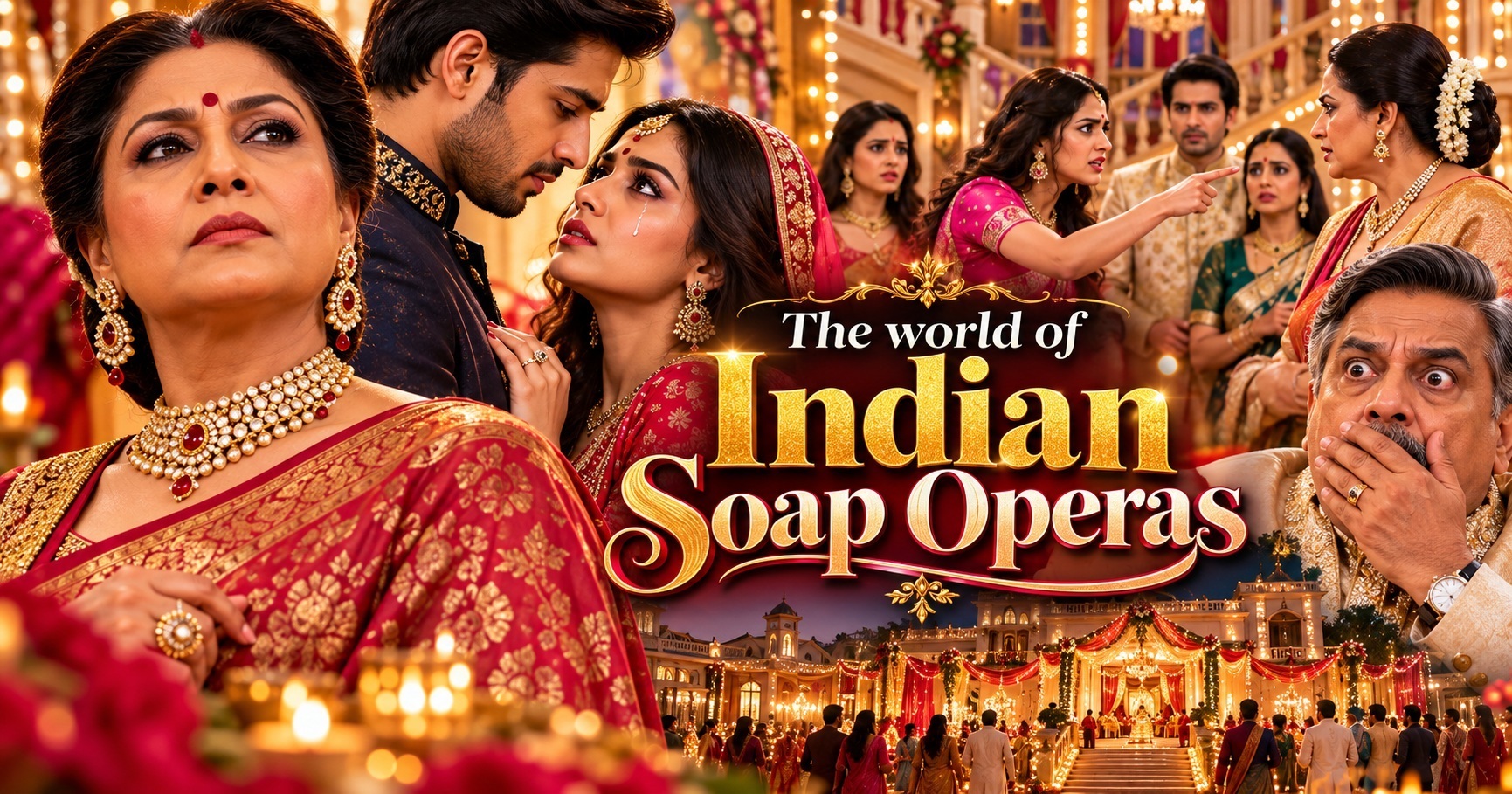
by Mukesh Pandya
Regardless of birthplace, people of Indian heritage may retain a lasting
connection to India. Family histories and names can link individuals to
states or regions, while elements of Indian culture may remain significant
even after substantial exposure to Western societies.
Even people of Indian heritage who were born and raised in the United States
are often asked, “Where are you from?” On one occasion, when I said that I
had been born in Africa, an American replied, “But you are not
Black!”—overlooking the racial diversity of countries such as South Africa
and Zimbabwe. In recent decades, migration from the Global South to
wealthier countries has generated both curiosity and, as public debates
indicate, resistance shaped by political tensions over immigration. More
recently, a server at my local hospital cafeteria asked where I was from. My
response—that I am an American citizen who has lived in the South for 30
years—did not satisfy him. Although I value my Indian heritage, my later
experiences and American life are equally important parts of my identity.
A window into life in India
As I enter my later years, I have become increasingly interested in the
everyday experiences and life of people in India. News reports frequently
note that a substantial share of India’s population—now well over one
billion—is younger than thirty-five. The country is geographically vast,
linguistically diverse, and marked by significant social and economic
differences. India in the 2020s is a large capitalist democracy with a Hindu
majority. These characteristics raise important questions: How are
relationships among friends, relatives, and employers shaped, and what
enables families and communities to remain cohesive?
Indian television includes news, talent competitions, game shows, and soap
operas. I began watching soap operas as one possible way to learn about
everyday life in India. Although TV producers produce these programs
primarily for domestic audiences, they also attract viewers in the United
States, Europe, and Australia. Stories centered on family tensions may hold
particular interest for older members of the Indian diaspora whose younger
relatives live and work abroad. In the United States, some viewers may
prefer these programs to news coverage dominated by political conflict and
violent crime. Soap operas can also help diaspora audiences maintain
connections to Hindu culture, social customs, and the Hindi language.
In earlier decades, this connection was supported by All India Radio and its
international broadcasts. At the time, full-length Hindi films without
subtitles or translation were popular in many countries. Most were “masala”
films that combined action, family melodrama, music, and dance. I remember
singing Hindi songs from these films without fully understanding some of the
lyrics. Some commentators questioned why their production standards often
differed from those of films by directors such as Satyajit Ray and Shyam
Benegal. A common explanation was that many audiences preferred escapist
entertainment and might find realistic depictions of hardship less
appealing. In several respects, contemporary Indian television soap operas
continue this tradition of popular escape.
Contemporary television soap operas often rely on improbable storylines and
heightened conflict, including deception within families and violence
against women. Broadcasters may accompany such scenes with disclaimers
stating that the programs are fictional and not intended to encourage harm.
Casts frequently emphasize young, fair-skinned, conventionally attractive
actors dressed in elaborate traditional clothing, while female characters
are sometimes portrayed by the script writers as manipulative or violent. At
the same time, these programs regularly depict Hindu festivals and present
moral narratives in which virtuous characters eventually overcome adversity.
Their uneven production standards may partly reflect the large demand for
nightly prime-time content, along with limited budgets and tight schedules.
Under these conditions, writers often draw on familiar conventions,
including emotionally charged music, intense family disputes, false
suspense, the suffering of poor characters, and conflicts between poorer and
wealthier groups.
Limitations of the Genre
In my view, Indian soap operas often present a narrow—and at times
unfavorable—image of India by relying heavily on sensational plots and
familiar formulas. These choices may reflect market pressures and the
demands of commercial television.
Opportunities for More Nuanced Storytelling
Given India’s achievements across many fields and its considerable creative
talent, television producers have an opportunity to develop richer, more
nuanced programming.
Tradition, Change, and Family Cohesion
Indian society continues to place substantial value on family relationships,
even as digital communication, migration, and broader social transformation
reshape those ties. The repeated emphasis on the same old story lines in
soap operas therefore raises an important question: Do these programs
suggest that traditional practices are essential to family cohesion, or are
the producers avoiding the realities of contemporary Indian life?