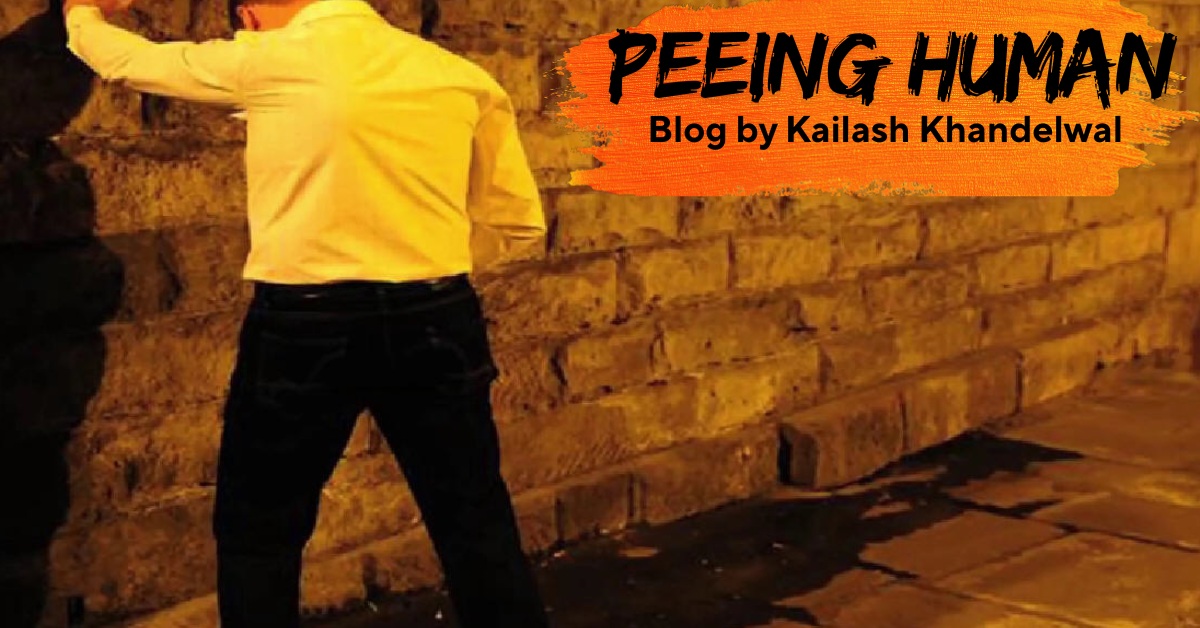
by Kailash Khandelwal
Before relocating to the USA, I spent a few months there on a freelance
project, living an ordinary 9-to-5 life. Those routine days gave me a chance
to quietly watch, notice, and absorb a few small, mundane things about
America. At the time, I did not realize how deeply those passing
observations would stay with me. That became clear only after I returned to
India for a short break.
One morning, from my ground-floor office in my home-town in India, I saw a spotless car with tinted
windows and a military government light on top pull up across the dusty
road. It was clearly no ordinary vehicle. It carried rank and authority. A
military vehicle had not been seen in that marketplace in ages, so its
arrival caught everyone, including me, by surprise.
A woman, perhaps in her fifties, stepped out and came briskly toward
me. Through the hastily closing car door, I caught a glimpse of another
passenger—a gentleman in decorated military dress—seated inside.
“Bhaiyya, I need to urgently use the toilet,” she said. Her English was
flawless. Her manner was polished. Sensing her urgency, I quickly led her to
the executive-only washroom inside my office.
Ours was the only office in that area with proper flushing toilets. Even
there, true to Indian hierarchies, one set was for executives and another
for the general staff. Strangers were allowed in only if someone vouched for
them. Amid the area’s encroached roads, a few filthy corners, including the
far end of our building, had become places where marketplace visitors and
local menial laborers answered nature’s call. To keep them away, some walls
carried humiliating warnings. In a few places, religious calendars were hung
as deterrents.
Almost every week, quarrels broke out over public urination
on private property. There would be shouting, abuse, and threats. Yet it
never stopped.
We agreed that the problem lay in a lack of civic sense. Yet trying to
instill it seemed like a task too complex for one lifetime. Public
humiliation and even physical reprimand were treated as acceptable solutions
until civic sense could somehow be enforced in some distant, unforeseeable
future.
As the military vehicle prepared to leave, I found myself wondering how long
the lady could have held on. My mind went back to the public toilet
facilities I had seen in the USA, where a restroom is usually close
by—whether you are in a shopping area, near an office block, or along a
highway. Most of the time, it is clean and accessible. Having one nearby is
simply taken for granted.
How did they do it?
Now, after living in the USA for many years, I can see how planning, built
on a practical partnership between the public sector, private businesses,
and corporations, has tackled the issue nationwide. What had seemed
insurmountable in my small marketplace in India had been addressed across
the length and breadth of the USA through a public-facilities-first
approach. America showed me that human ingenuity, when backed by will and
planning, is powerful enough not only to find solutions, but to implement
them at scale.
There has been a paradigm shift in my thinking, and I am now a strong
advocate of a public-facilities-first approach. I no longer respond with anger
to videos or pictures of public urination; instead, I remember the urgency
written so plainly on that lady’s face. I also think of a friend who often
travels to India and carries medicines to suppress the urge on days when he
expects to spend long hours in the market.
A gas station owner in the USA I knew told me that keeping the toilets clean was an
unwritten but mandatory part of customer service. It was hard, thankless
work, he would often say. Customers took clean restrooms for granted. In all
his years, he had hardly heard a word of thanks, nor had he ever expected
any thanks.
From the corner of my eye, I saw the military vehicle move forward and then
stop. The officer in the front seat, who seemed to be the PA, stepped out
and walked toward me. As he approached, he nodded in greeting and said,
“Saheb asked me to convey his many, many, many thanks.”
Kailash is the publisher of USADunia.com and AtlantaDunia.com