Ramayana, Adipurush, Mahadev: Our screen gods look
straight out of the gym lately
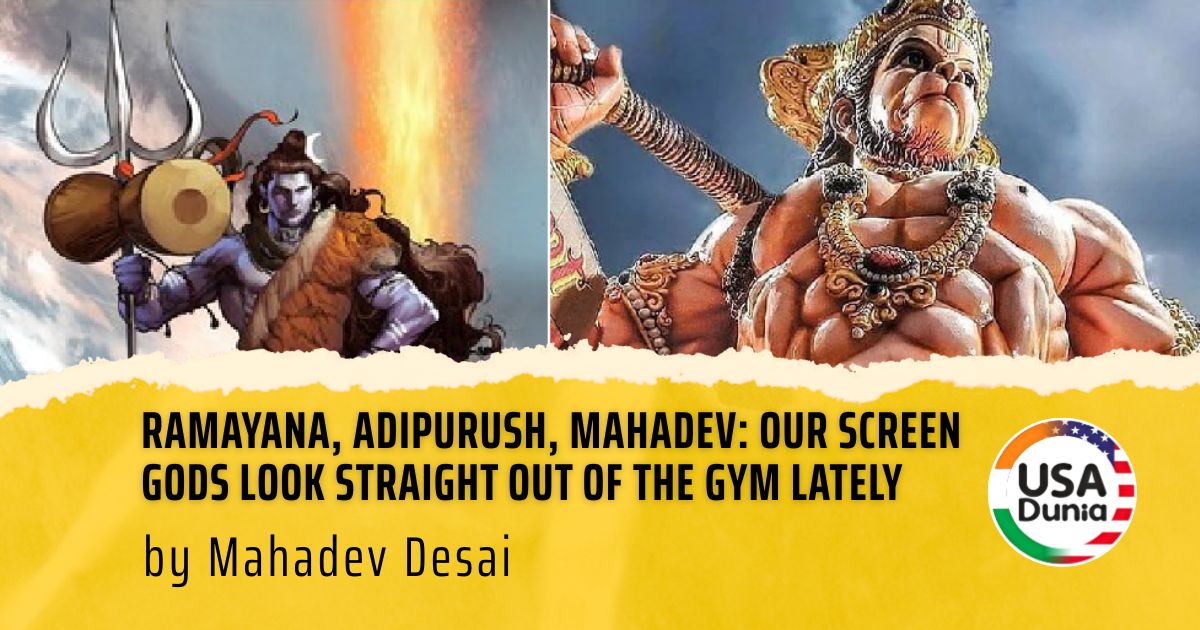
by Mahadev Desai
From films to soaps, Indian pop culture is increasingly portraying male gods
from Ramayana, Mahabharata and Puranas as gym-toned hunks who could give
Chris Hemsworth's Thor a run for his money.
The conversation seems to arise every time Ramayana or Mahabharata is
adapted for the screen lately. The picture has frequently been: Lord Rama in
the forest exile, not just serene and graceful as in traditional art, but
with sharply chiselled abs, broad shoulders and a vascular, gym-honed
physique as he draws his bow in slow motion. Or the Pandavas and Kauravas
swaggering across the battlefield like fitness models in designer armour.
Our gods have been turned into Greek Gods for the screen, and the
transformation is everywhere — across Hindi and regional TV soaps, films and
OTT shows. In short, wherever filmmakers are adapting the epics.
After Ramanand Sagar's Ramayana and BR Chopra's Mahabharata in the
Doordarshan days, newer shows and films based on these epics have made male
divinity and warrior characters look like they have just stepped out of the
gym: Toned bodies and glowing skin, optimised for dramatic slow-motion
sequences. What began as action-oriented portrayals has extended to the
divine: Hanuman exhibits superhero agility, Rama draws his bow with
model-like poise, and Shiva is depicted with muscular strength.
South Indian folklore films such as HanuMan and Mirai have further advanced
this trend, blending mysticism with VFX spectacle where divine figures
appear more visually spectacular than battle-ready.
This trend mirrors a Hollywood cinematic pattern where gods and deities are
idealised as athletic supermodels. A character like Chris Hemsworth’s Thor
embodies the sculpted template Hollywood has favoured for decades. In
contrast, older Western Biblical epics like Ben-Hur or The Ten
Commandments conveyed strength and moral gravitas through presence and
stature, without the hyper-defined aesthetics common today.
Greek God Effect: Modern cinema sculpting screen idols
In the Indian context, the shift is particularly notable given the cultural
resonance of these figures. Traditional temple iconography and Raja Ravi
Varma’s paintings depicted deities with softer, graceful forms symbolising
abundance and serenity, far removed from bodybuilder ideals.
Ancient texts emphasise inner virtues over physical metrics, yet pop culture
increasingly translates these into Instagram-era physiques that make gods
appear suited for both cosmic battles and glossy magazine covers.A fine
example is Mohit Raina’s popular portrayal of Lord Shiva in Devon Ke Dev
Mahadev. With his tall, well-built and striking frame, Raina’s Shiva
combined intensity and physical presence in a way that felt almost like a
living Greek sculpture on screen. Many recent shows have followed and
amplified this benchmark.
The reasons are clear and practical. The fitness wave post-2010, advanced
VFX capabilities, and the need to appeal to younger global audiences
familiar with Marvel-DC aesthetics have made this the go-to visual language.
A muscular Hanuman or sculpted Rama creates instant cinematic impact, fills
trailers with awe, and makes ancient stories feel contemporary. Daily soaps
and serials reaching millions have quietly adopted similar casting and
styling choices, reinforcing this template across households.
The superhero makeover: Can the Indian epic maintain its soul?
This is not a critique of fitness or strong actors — capable, athletic
bodies enhance epic action and grandeur. However, the near-uniform fixation
raises questions: Are we broadening these timeless tales by updating their
look for modern screens or narrowing their rich symbolic diversity into a
single contemporary ideal?
As new Ramayana projects and ongoing TV adaptations push epic dramas towards
wider audiences, this visual grammar dominates. It successfully bridges
reverence with entertainment demands. Yet, the deeper question remains
whether future portrayals will embrace varied physical representations
reflecting the multiplicity in our texts and heritage, moving beyond the
current dominant aesthetic while retaining the power and devotion at the
heart of these stories.
The trend continues to spark conversation with every new poster or teaser.
Indian pop culture is boldly reimagining its deities for the streaming and
multiplex age. The challenge is ensuring that in this visual evolution, the
soul of the epics — their moral depth and spiritual essence — remains as
compelling as the perfectly chiselled frames on screen.