How much sleep does one need?

By Dr.Panchajanya Paul, MD
Sleep along with nutrition and exercise constitute the three pillars of good
health. We spend about a third of our life in sleep. Our requirement varies
based on our age, health and work requirement. The American culture values
hard work, productivity and efficiency. According to sleep surveys, about
one third of the US population may be suffering from sleep problems.
A
recent study found that US workers lose 11.3 days of work due to sleep
problems. That averages out to 2280 dollars lost per person per year. In
total, untreated sleep problems may cost the US economy 63 billion dollars
annually.
Our sleep-needs change as we grow older. Newborns and children require the
most sleep, teenagers also require more sleep than adults, and as we reach
adulthood our sleep needs stabilize. The National Sleep Foundation has the
following recommendations:
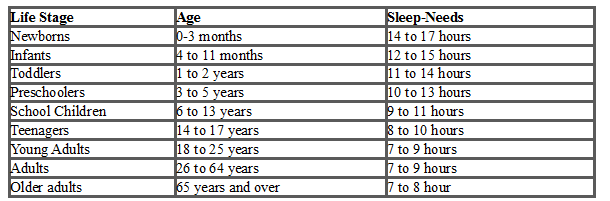
These are the guidelines for healthy individuals. A variation from these
hours may be unhealthy and suggest a sleep-disorder or a medical illness.
Sleep-hours are different from bed-hours because we do not fall asleep as
soon as we lie down. There is a time lag between the time we lie down and
fall asleep. This is known as sleep latency and it varies from person to
person. Also we do not get out of bed as soon as wake up. We often spend a
few moments in bed before getting up. For many the time in bed before and
after sleep is time for contemplation, creativity and introspection. Many
people come up with brilliant ideas while in bed. Also the time in bed is
for relaxation, discussion, making love, etc… Thus one should add an extra
one to two hours of bed-time depending on one’s routine.
Sleep requirements increase when we are under stress. It increases if we are
learning some new skills as sleep boost memory and learning. Sleep need also
go up when we are sick or are recovering from illness. Sleep hours go up
from pregnant and lactating women. If someone is in shift work or night
work, or those with irregular sleep schedule, they will require more hours
to compensate for the disrupted sleep. In summary, one should try to sleep
adequately. Use the table as guidance. Poor sleep quality or quantity can
lead to acute and chronic health problems, afflicting the mind and the body.
Take your sleep seriously for a healthy living.