Thousands Celebrate Diwali at Lilburn’s BAPS Mandir as India’s New Consul General Joins Festivities
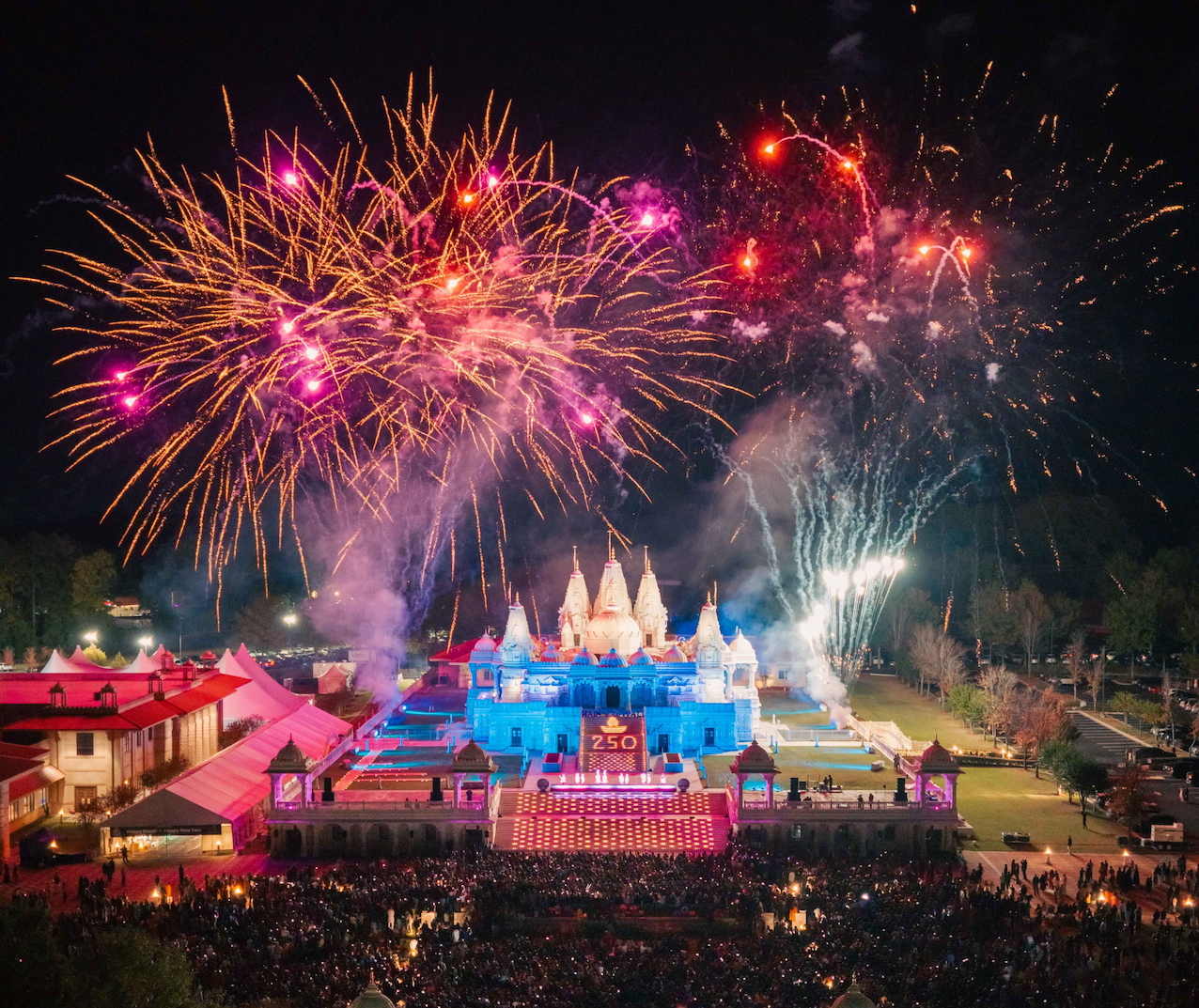
“Light Beyond Lamps: Journey Through Hindu Sanskruti (Culture)” exhibition invites visitors to see how Hindu traditions live on beyond the festival
LILBURN, Ga. — Thousands of families, neighbors, and community members gathered at the BAPS Shri Swaminarayan Mandir in Lilburn on Sunday, Nov. 8, to celebrate Diwali, the festival of lights, with glowing diyas (clay lamps), elaborate rangoli (colorful and intricate floor art), a traditional Annakut offering of hundreds of vegetarian dishes, and an exhibition themed “Light Beyond Lamps: Journey Through Hindu Sanskruti (Culture).”
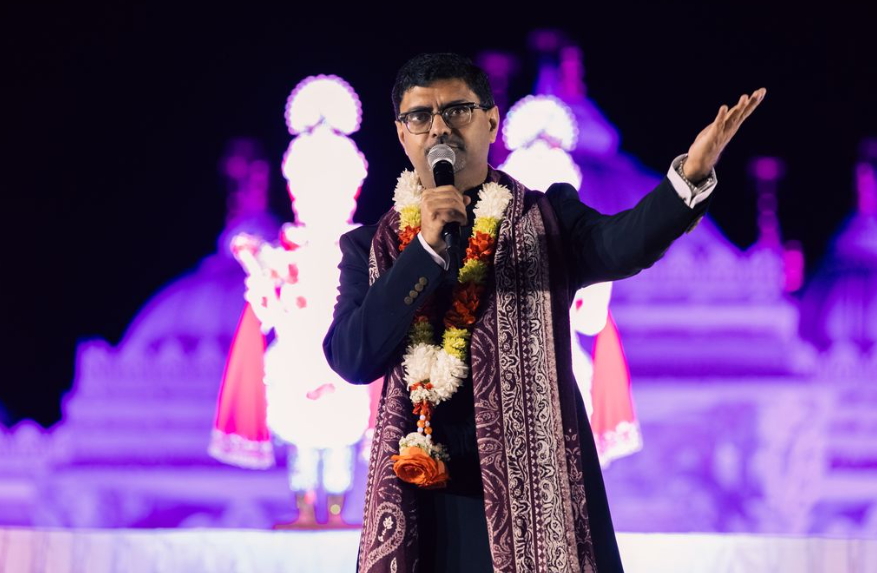
Among those celebrating was Dr. Sumit Seth, Consul General of India in Atlanta, who said a social media reel of last year’s celebration first drew him to the mandir: “A few months back, I came to know that I had been appointed as the Consul General of India to Atlanta. I went to Instagram, and one of the reels that came up was last year’s Diwali celebration here at the Swaminarayan Mandir. This desire came up: I wish I could celebrate Diwali in this place. And today, I am in front of you celebrating Diwali with all of you.”
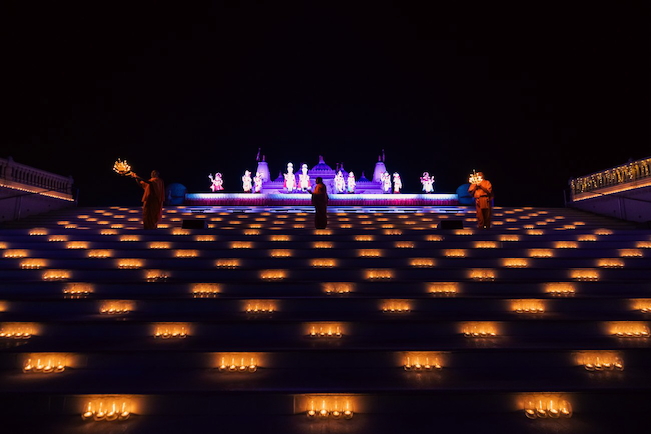
In Lilburn, the Diwali journey can begin with one diya. Although its flame is small, it is clearly visible against the darkness; as more lamps are lit, the light grows brighter—just as Diwali’s values can be passed from one person to another and from one generation to the next.
The Hindu, Jain, and Sikh communities value Diwali as a time to celebrate the triumph of light over darkness, family togetherness, gratitude, and reflection on the values that guide everyday life.
At the BAPS mandir, those feelings came to life as generations celebrated together, passing on customs handed down over many centuries while making new memories. Visitors were greeted with traditional decor such as colorful rangoli, diyas, and festive lights, and families came for darshan, to pray, and to spend time together. For some people, the celebration felt like home; for others, it was a chance to experience Diwali and learn Hindu traditions for the first time.
“I like to think of Diwali as a way to ask: How can we be the light to uplift the world? How can we go back to our families and communities and bring back that goodness, that compassion, and that joy to others?” said Dr. Umangi Shukla, a BAPS public affairs volunteer.
For many Gujarati Hindu families, the days around Diwali also mark the beginning of the Gujarati New Year, one of several New Year customs observed in different parts of India.
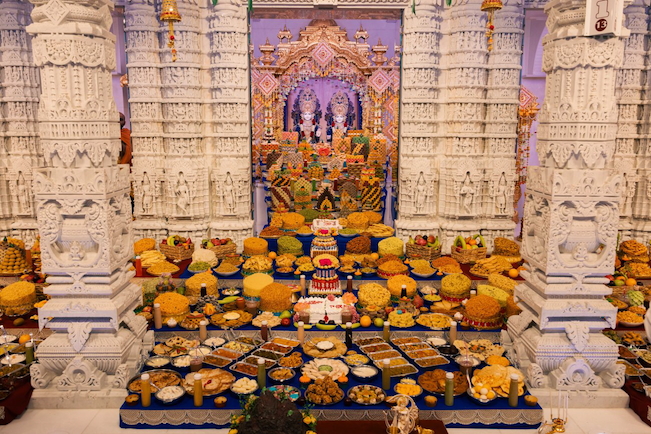
The Annakut is a tradition in which devotees prepare hundreds of vegetarian dishes and offer them to God as a sign of devotion and gratitude. Annakut, which means "mountain of food," is arranged in an elaborate offering before the sacred images, representing thankfulness for the year's blessings and hope for the coming year. The sweets, savories, fruits, and other foods are carefully presented as an act of love and reverence toward the divine.
Although each dish took hours to prepare, Annakut stands for a simple and deeply significant idea: when starting the new year, one should give thanks for the blessings of the previous year.
This spirit of reflection shaped this year’s theme and accompanying exhibition, “Light Beyond Lamps: Journey Through Hindu Sanskruti (Culture).”
The exhibition encouraged visitors to look beyond the lights and colors generally linked with Diwali and see how Hindu culture is carried on day to day through family, faith, traditions, service, and enduring values.
The exhibition showed that traditions remain meaningful when people live with them and pass them on: a parent teaching a child, an act of kindness, time spent in service, or a neighbor invited to a celebration can carry those values beyond one person.
The celebration itself was also a form of seva, or selfless service. In the days and weeks before Diwali, volunteers of all ages donated their time and skills to prepare the dishes for the Annakut, make rangoli, decorate the mandir, and greet guests.
“We [at the Consulate] are working on the five Ts of togetherness: trade, technology, tourism, talent, but the final T is traditions. And today, we are celebrating the time-tested ancient tradition of India by celebrating this festival of lights,” Seth added.
As families, neighbors, and community members gathered, the celebration showed that the light of Diwali goes well beyond the lamps themselves.
It lives through gratitude, faith, family, service, and the sharing of traditions. Although the lamps may one day be put out, their message will endure.
About BAPS
BAPS is a volunteer-driven spiritual organization committed to fostering individual growth through Hindu values of faith, service, and harmony. It enriches society with the devoted efforts of tens of thousands of volunteers from diverse professional and social backgrounds, contributing millions of volunteer hours annually. Under the spiritual leadership of His Holiness Mahant Swami Maharaj, BAPS nurtures Hindu traditions in over 115 North American and 3,500 communities worldwide. Through these communities, it champions holistic personal growth, promotes social progress, and encourages diversity by embracing all. For more details, visit www.baps.org.
About Mahant Swami Maharaj
His Holiness Mahant Swami Maharaj is the sixth and current spiritual successor of Bhagwan Swaminarayan. He was ordained a swami by Yogiji Maharaj in 1961 and named Sadhu Keshavjivandas. As he was appointed the head (Mahant) of the Mandir in Mumbai, he became known as Mahant Swami. His devout, humble, and service-focused life earned him the innermost blessings of Yogiji Maharaj and Pramukh Swami Maharaj. Mahant Swami Maharaj travels worldwide, inspiring people through his insightful spiritual discourses and disciplined conduct. His virtuous lifestyle and profound devotion to Bhagwan Swaminarayan and gurus are ideals toward which devotees strive. Mahant Swami Maharaj became the guru and President of BAPS upon Pramukh Swami Maharaj’s passing in 2016.